


How can tailoring techniques be used to optimize the leg-lengthening effect of women's jeans?
Release Time : 2025-12-04
The tailoring of women's jeans is a core technique for shaping leg lines. It requires three-dimensional tailoring, pattern innovation, and meticulous attention to detail to achieve a smooth transition from the waist and hips to the ankles. The core logic lies in combining ergonomics and visual aesthetics, designing differentiated tailoring solutions for different leg shapes to create the illusion of long, straight, or curvaceous legs. This process must balance functionality and style, meeting the comfort needs of everyday wear while enhancing the overall sophistication of the look through line reconstruction.
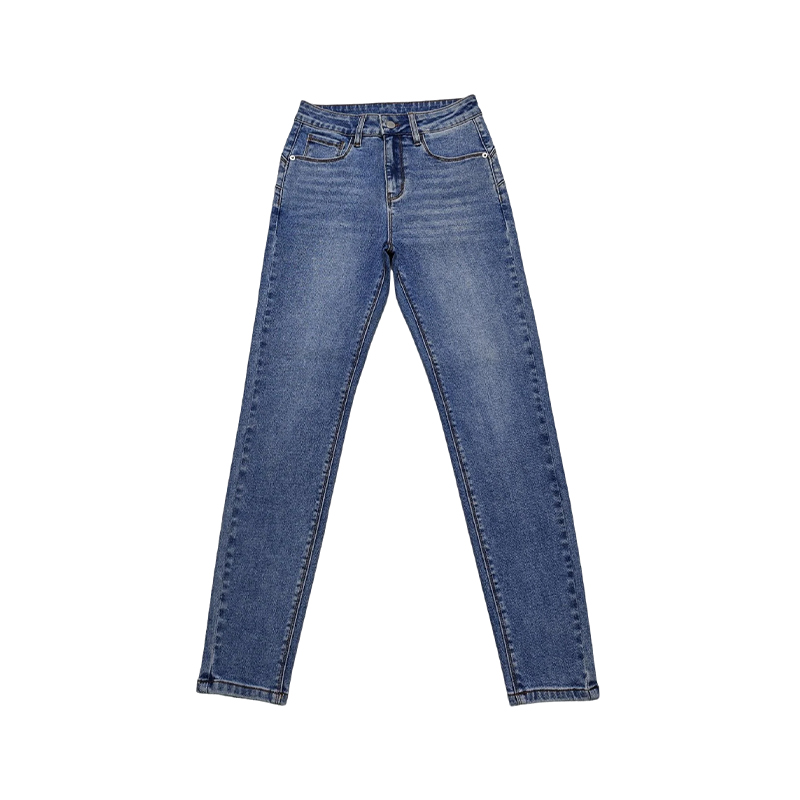
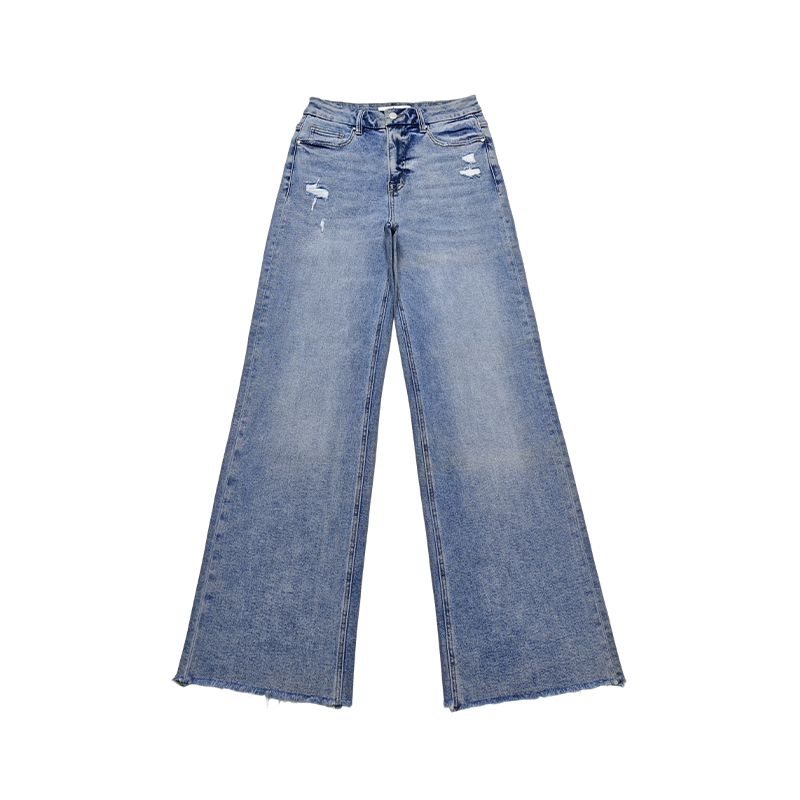
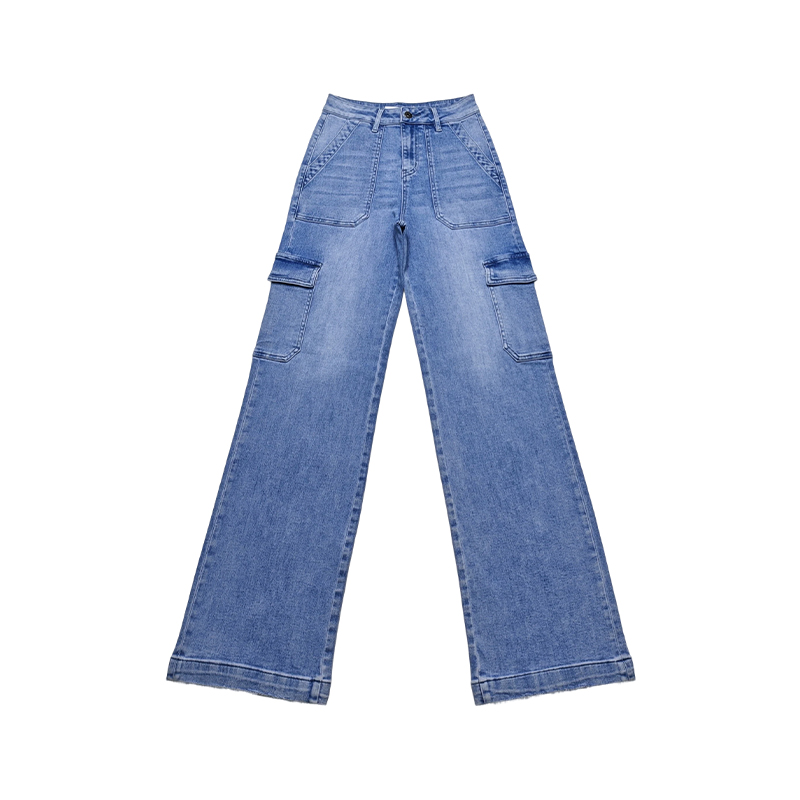
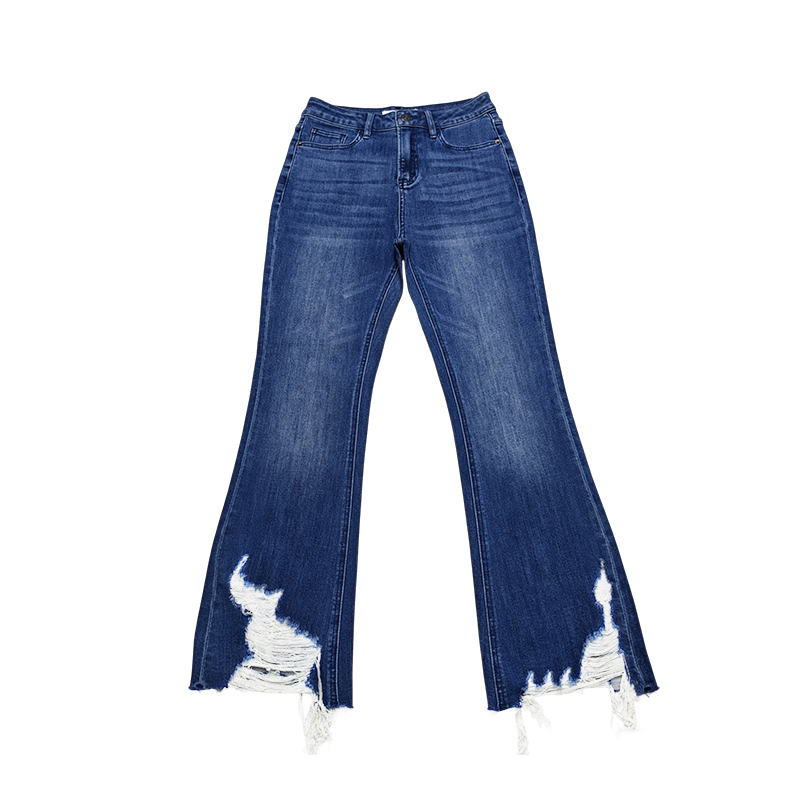
Three-dimensional tailoring is a fundamental technique for optimizing leg lines. Traditional flat tailoring relies on single-dimensional data, which can easily lead to insufficient fit between the pants and the legs. Three-dimensional tailoring, on the other hand, uses a three-dimensional human body model to simulate the actual wearing condition, accurately capturing the contours of the waist, hips, thighs, and calves. For example, for pear-shaped women, designers add three-dimensional tailoring allowance at the hip area, using darts and gathers to transfer excess fabric to the side seams or back center, preventing fabric accumulation in the hip area while maintaining a moderately loose fit in the thigh area. This creates a visual contrast between the upper and lower body, making the legs appear longer. The choice of pant style directly affects how leg lines are presented. Straight-leg pants, with their even width from top to bottom, minimize the difference in thickness between the thighs and calves, making them suitable for women with X-shaped or O-shaped legs, as the vertical lines elongate the leg proportions. Flared pants, on the other hand, widen slightly outwards at the calves, creating an A-line silhouette that is narrower at the top and wider at the bottom, balancing the shape of thicker thighs or muscular calves, while also visually lengthening the legs through the connection between the hem and the shoe. Skinny jeans, relying on highly elastic fabric and a close-fitting cut, fully outline the leg curves, suitable for women with straight legs, as the fabric tension reduces wrinkles and enhances the smoothness of the lines. The differences in the cuts of different pant styles are essentially a visual reconstruction of leg proportions.
The precision of the waist and hip cut determines the overall balance of the look. Women's jeans typically have a larger waist-to-hip ratio than men's, requiring special tailoring to avoid issues like "crotch constriction" or "tight hips." For example, high-waisted cuts raise the waistline, drawing the eye to the narrowest part of the waist while using the curves of the waistband and hips to minimize the appearance of abdominal fat. Mid-waisted cuts focus more on the smooth transition between the hips and thighs, reducing friction at the groin area through forward-positioned side seams or three-dimensional back tailoring. Low-waisted cuts require a hip-lifting design to prevent the fabric from slipping down and creating a sagging effect. Subtle adjustments to the waist and hip cuts directly affect the starting point and direction of the leg line.
The knee area is crucial for optimizing the mid-leg line. Traditional jeans tend to wrinkle horizontally at the knees due to movement, disrupting the smoothness of the line. Modern tailoring addresses this by adding a moderate amount of fabric above the knee or using a double-dart design on the front panel, allowing the fabric to drape naturally when bending, reducing wrinkle buildup. For example, some brands use elastic fabric panels on the inside of the knee, ensuring freedom of movement while maintaining the shape of the pants through fabric elasticity; or they use laser cutting technology to create a slight flare at the knee, using airflow to reduce stuffiness and create a vertical line extension effect.
The way the hem is cut affects the finishing effect of the leg line. Rolled-up hems, by folding the fabric upwards to expose the thinnest part of the ankle, create a visual break point, suitable for pairing with ankle boots or high heels, enhancing the illusion of leg length; frayed hems use irregular cuts to break the stereotype of straight lines, extending leg length through the drape of the frayed fibers; flared hems, with their exaggerated outward expansion design, shift the focus from leg imperfections to the hem shape, suitable for pairing with platform shoes or high heels, further lengthening the leg proportions with the heel height. The diversity of hem cuts provides more stylistic options for modifying leg lines.
The synergistic effect of fabric elasticity and cut cannot be ignored. High-stretch denim fabrics can compensate for tailoring deficiencies through fabric tension. For example, in skinny jeans, the addition of elastic fibers makes the pants fit the leg curves better while reducing wrinkles caused by movement. Non-stretch fabrics, on the other hand, rely on precise tailoring to achieve the desired silhouette. For instance, straight-leg pants use three-dimensional tailoring to maintain their shape and prevent deformation caused by fabric loosening. The match between fabric and tailoring determines the longevity of the jeans' flattering effect.
Optimizing the tailoring of women's jeans requires a multi-dimensional approach, including three-dimensional tailoring, pant style selection, waist and hip treatment, knee design, hem cutting, and fabric coordination. Precise control of technical details achieves a visual reshaping of the leg line. This process not only tests the designer's understanding of ergonomics but also requires combining fashion trends and wearing scenarios to create trousers that meet both functional needs and aesthetic value.