


How can women's trousers achieve a perfect fit while maintaining freedom of movement and comfort?
Release Time : 2026-01-15
In the modern woman's wardrobe, an ideal pair of jeans is not just a basic item, but an extension of confidence and style. Consumers desire a slimming and figure-hugging silhouette, yet also demand comfort without constriction during prolonged sitting, freedom of movement, and wrinkle-free movement when squatting. This seemingly contradictory need—the balance between "fit" and "freedom"—is the core challenge in women's trousers design and fabric technology. Through the scientific blending of elastic fibers, three-dimensional tailoring, and ergonomic pattern optimization, high-end jeans have successfully broken the traditional limitations of "the tighter the fit, the slimmer the look; the looser the fit, the more comfortable," achieving a harmonious unity of aesthetics and comfort.
1. Elastic Fabric: The Technological Foundation of Comfort
Traditional pure cotton denim, while crisp and stylish, lacks stretch and struggles to adapt to dynamic body changes. Modern slim-fit women's trousers generally use a blend of cotton and elastic fibers, with elastic fibers comprising 2%–5%. This seemingly small proportion brings about revolutionary changes:
2% spandex provides moderate elasticity, suitable for daily commutes, and keeps the pants from deforming;
3%–5% high-elastic fiber provides greater stretch, meeting the needs of large movements such as squats, cycling, and yoga, while quickly returning to its original shape, preventing bulges at the knees or sagging at the hips.
In addition, some brands have introduced two-way stretch weaving, giving the fabric stretch in both the horizontal and vertical directions, further enhancing freedom of movement.
2. Three-Dimensional Cutting: From Flat to Three-Dimensional Human Body Fit
Even the best fabric needs precise cutting to reach its full potential. Women's trousers abandon the "one-size-fits-all" flat pattern making, instead employing 3D three-dimensional tailoring technology:
Precise Hip-Waist Difference Calculation: Given the significant differences in women's waist-to-hip ratios, designers use big data analysis of different body types to set multiple levels of hip and waist circumference differences, ensuring a comfortable fit without constriction at the waist or gaps in the hips;
Optimized Back Crotch Curve:Lengthening the back center line and adjusting the back crotch curvature prevents tightness or fabric bunching when sitting;
Pre-shrunk Allowance at the Knees and Calf:Small creases are pre-installed at the knees and calves to prevent excessive stretching and thinning of the fabric or permanent creases when bending.
This "dynamic allowance" concept allows the trousers to fit snugly when static and stretch comfortably when in motion.
3. Zoned Structural Design: Enhanced Functionality in Key Areas:
High-end jeans often employ zoned weaving or splicing techniques to provide differentiated performance in different areas.
High-density twill fabric is used on the hips and outer thighs to enhance support and provide lift and shaping.
Higher elasticity fabric or embedded elastic inserts are used in the crotch and inner knee areas to release pressure during movement.
A wide elastic band or soft lining is built into the waistband to avoid marks and improve fit and comfort.
This "combination of strength and softness" structural strategy achieves a balance between localized reinforcement and overall smoothness.
4. Finishing Processes: Dual Guarantee of Touch and Shape Preservation
The comfort of jeans also stems from the softening wash process. Enzyme washing, stone washing, or airflow softening processes remove stiffness from the fabric, giving it a skin-friendly feel; simultaneously, resin setting or high-temperature pre-shrinking reduces shrinkage and deformation after wear. Some products also add moisture-wicking or antibacterial agents to enhance the dryness experience during extended wear.
5. Slim Fit Subdivision: From "Universal Slim Fit" to "Precise Fit"
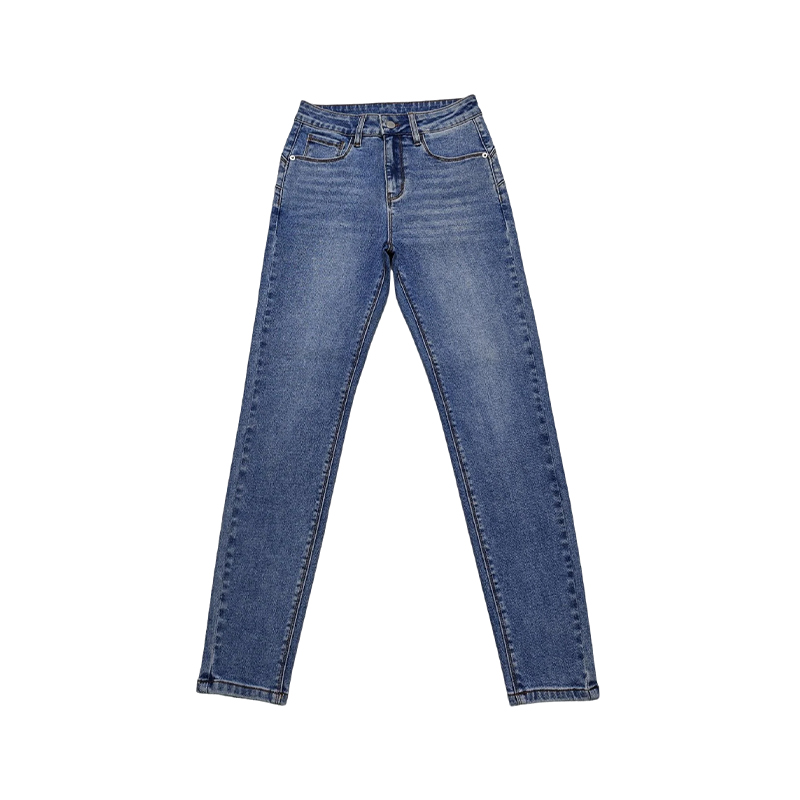
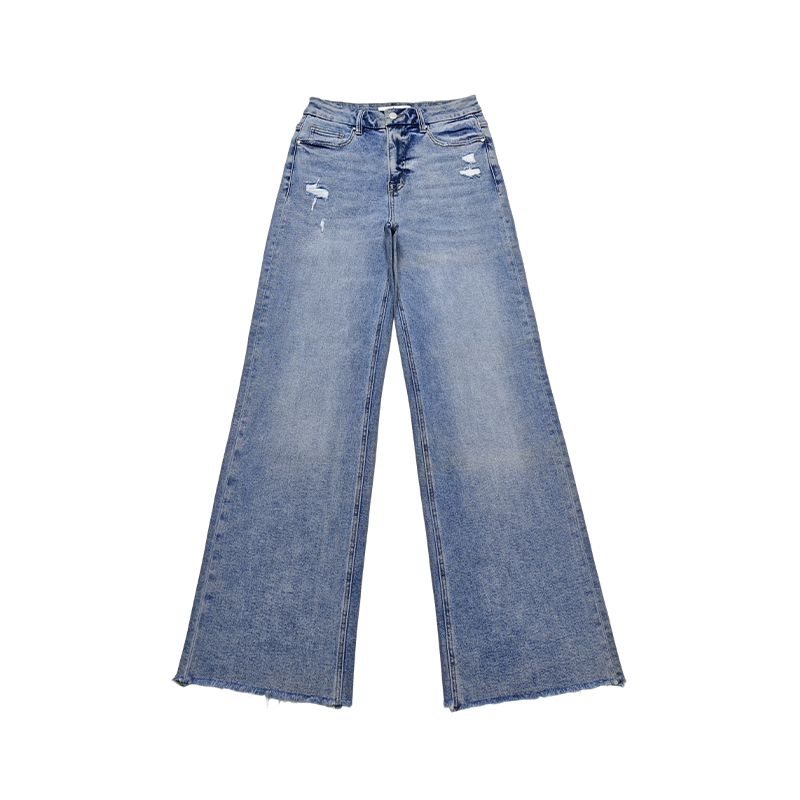
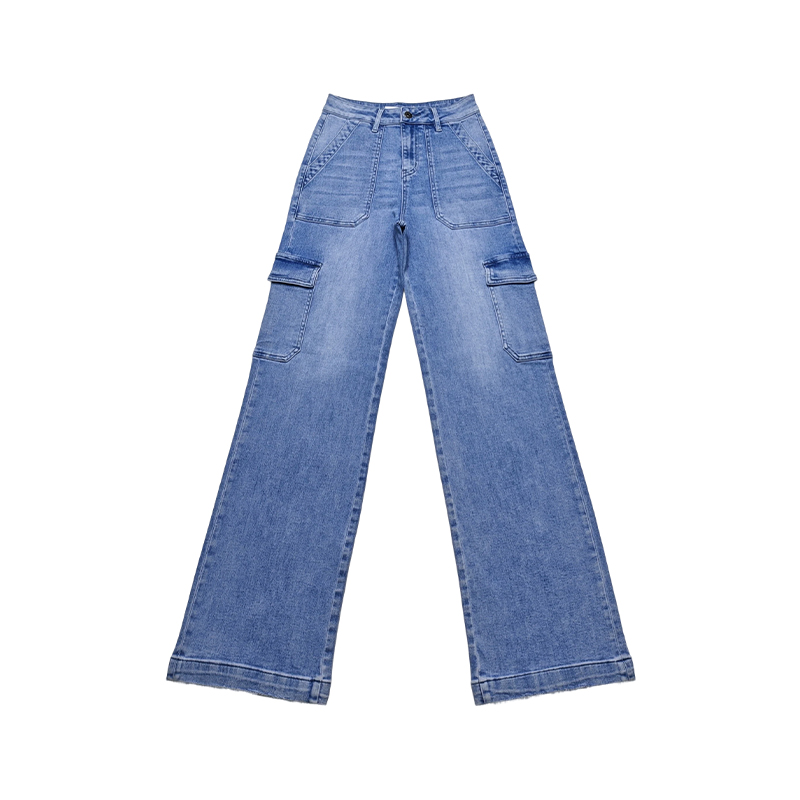
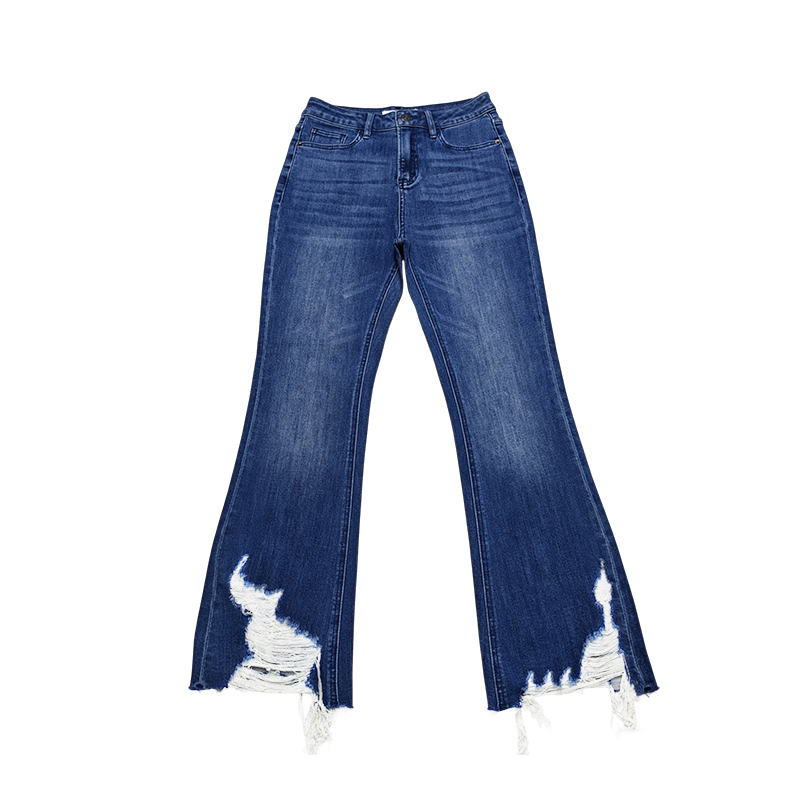
Today, brands no longer offer a single "slim fit," but rather subdivide into styles such as skinny, cigarette, flared, and straight-leg slim fit, indicating the suitable leg types. Consumers can choose the most suitable fit based on their own proportions, avoiding blindly pursuing "tightness" at the expense of comfort.
Women's trousers are the culmination of materials science, ergonomics, and fashion aesthetics. They know how to gently support the waist and hips, subtly release pressure between the knees and legs, and silently adapt to the body's rhythm with every leg lift, turn, and sit. When "fit" no longer means constraint, and "freedom" no longer equals looseness, jeans transcend the garment itself, becoming a second skin for women's free expression—showcasing the beauty of curves while protecting the joy of movement.
1. Elastic Fabric: The Technological Foundation of Comfort
Traditional pure cotton denim, while crisp and stylish, lacks stretch and struggles to adapt to dynamic body changes. Modern slim-fit women's trousers generally use a blend of cotton and elastic fibers, with elastic fibers comprising 2%–5%. This seemingly small proportion brings about revolutionary changes:
2% spandex provides moderate elasticity, suitable for daily commutes, and keeps the pants from deforming;
3%–5% high-elastic fiber provides greater stretch, meeting the needs of large movements such as squats, cycling, and yoga, while quickly returning to its original shape, preventing bulges at the knees or sagging at the hips.
In addition, some brands have introduced two-way stretch weaving, giving the fabric stretch in both the horizontal and vertical directions, further enhancing freedom of movement.
2. Three-Dimensional Cutting: From Flat to Three-Dimensional Human Body Fit
Even the best fabric needs precise cutting to reach its full potential. Women's trousers abandon the "one-size-fits-all" flat pattern making, instead employing 3D three-dimensional tailoring technology:
Precise Hip-Waist Difference Calculation: Given the significant differences in women's waist-to-hip ratios, designers use big data analysis of different body types to set multiple levels of hip and waist circumference differences, ensuring a comfortable fit without constriction at the waist or gaps in the hips;
Optimized Back Crotch Curve:Lengthening the back center line and adjusting the back crotch curvature prevents tightness or fabric bunching when sitting;
Pre-shrunk Allowance at the Knees and Calf:Small creases are pre-installed at the knees and calves to prevent excessive stretching and thinning of the fabric or permanent creases when bending.
This "dynamic allowance" concept allows the trousers to fit snugly when static and stretch comfortably when in motion.
3. Zoned Structural Design: Enhanced Functionality in Key Areas:
High-end jeans often employ zoned weaving or splicing techniques to provide differentiated performance in different areas.
High-density twill fabric is used on the hips and outer thighs to enhance support and provide lift and shaping.
Higher elasticity fabric or embedded elastic inserts are used in the crotch and inner knee areas to release pressure during movement.
A wide elastic band or soft lining is built into the waistband to avoid marks and improve fit and comfort.
This "combination of strength and softness" structural strategy achieves a balance between localized reinforcement and overall smoothness.
4. Finishing Processes: Dual Guarantee of Touch and Shape Preservation
The comfort of jeans also stems from the softening wash process. Enzyme washing, stone washing, or airflow softening processes remove stiffness from the fabric, giving it a skin-friendly feel; simultaneously, resin setting or high-temperature pre-shrinking reduces shrinkage and deformation after wear. Some products also add moisture-wicking or antibacterial agents to enhance the dryness experience during extended wear.
5. Slim Fit Subdivision: From "Universal Slim Fit" to "Precise Fit"
Today, brands no longer offer a single "slim fit," but rather subdivide into styles such as skinny, cigarette, flared, and straight-leg slim fit, indicating the suitable leg types. Consumers can choose the most suitable fit based on their own proportions, avoiding blindly pursuing "tightness" at the expense of comfort.
Women's trousers are the culmination of materials science, ergonomics, and fashion aesthetics. They know how to gently support the waist and hips, subtly release pressure between the knees and legs, and silently adapt to the body's rhythm with every leg lift, turn, and sit. When "fit" no longer means constraint, and "freedom" no longer equals looseness, jeans transcend the garment itself, becoming a second skin for women's free expression—showcasing the beauty of curves while protecting the joy of movement.