


How to balance comfort, shape retention, and drape in women's trousers?
Release Time : 2026-02-12
Women's trousers, a classic wardrobe staple, hold an irreplaceable position thanks to their versatility and fashionable appeal. Whether for daily commutes, weekend outings, or lightly formal occasions, a well-tailored, high-quality pair of jeans can easily create a casual or trendy look.
1. Comfort: The Foundation of the Wearing Experience
Comfort is the primary factor determining whether a pair of jeans is "easy to wear." Traditional denim, primarily made of 100% cotton, is durable but lacks elasticity, easily causing a feeling of restriction during prolonged sitting or activity. Modern women demand greater dynamic adaptability in their clothing; therefore, adding an appropriate amount of elastic fibers is key to improving comfort. Generally, blended fabrics containing 2%–5% elastic fibers retain the crispness of denim while giving the trousers moderate stretch, conforming to the body's curves without being constricting. In addition, different waistline designs, such as high-waisted and mid-waisted, also affect the wearing experience—high-waisted styles provide abdominal support, while mid-waisted styles offer a more natural and relaxed feel. Choosing a fit that suits your body shape and lifestyle is the first step to achieving comfortable wear.
2. Shape Retention: Ensuring Fit and Durability
Shape retention refers to the ability of jeans to maintain their original silhouette and structure after multiple wears and washes. Poor shape retention can lead to problems such as bulging knees, sagging hips, and deformed hems, affecting both appearance and lifespan. Improving shape retention primarily relies on high-quality fabrics and advanced weaving techniques. For example, denim using twill or double-sided weaves has a tighter structure and stronger tensile strength; pre-shrinked fabrics effectively reduce shrinkage and deformation after washing. Furthermore, proper tailoring and sewing techniques are equally important—adding three-dimensional tailoring or reinforced seams to stress areas such as the hips and thighs significantly enhances the overall stability of the jeans. It's worth noting that excessive pursuit of softness or high elasticity may sacrifice shape retention; therefore, a balance must be found between elasticity and support.
3. Drape: Creating Smooth Lines and a Premium Texture
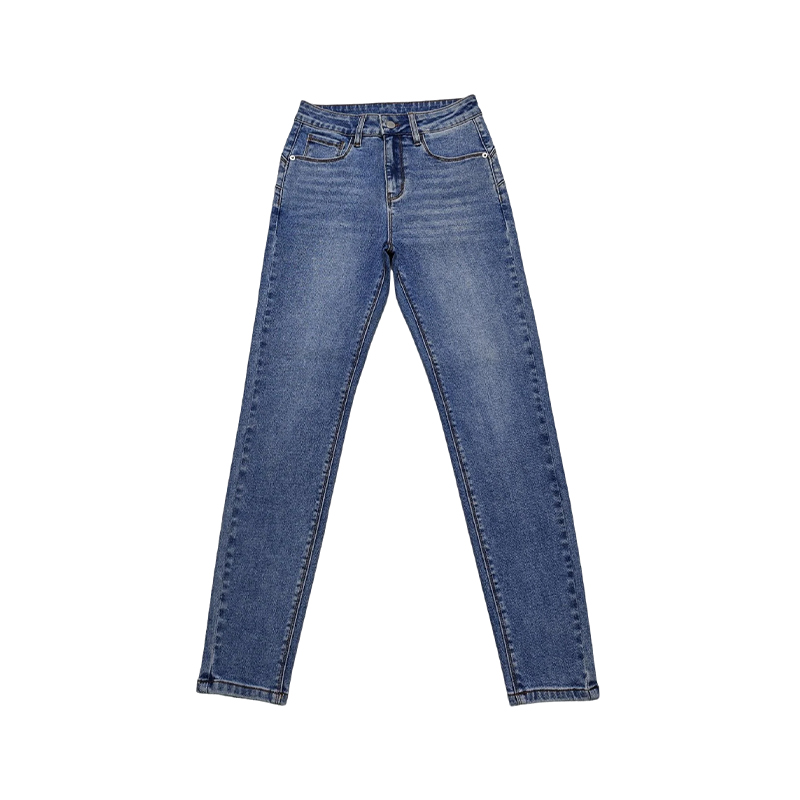
Drape refers to the fabric's ability to naturally drape and create smooth lines under gravity. Good drape allows jeans to fit the legs without appearing stiff, creating a long and sleek visual effect, which is especially crucial for slim-fit or straight-leg jeans. Factors affecting drape include fabric weight, yarn fineness, and finishing processes. Generally, medium-weight denim is neither too heavy nor too light, making it easier to achieve ideal drape; fabrics woven with finer yarns have a smoother surface and better drape. Some high-end brands also use finishing processes such as enzyme washing, stone washing, or liquid ammonia treatment to soften fibers and improve fabric flow, thereby enhancing the drape effect. It is worth noting that a stronger drape is not always better—excessive softness can lead to jeans lacking structure and losing the crispness that jeans should have.
4. The Synergy of Three Elements: The Fusion of Technology and Design
Women's trousers are works of art that achieve a delicate balance between comfort, shape retention, and drape. Today, many brands achieve this goal through innovative fabric technologies. For example, fabrics using "two-way stretch" technology provide moderate stretch both horizontally and vertically, balancing freedom of movement with shape stability; while the addition of "memory fibers" allows the pants to quickly rebound after stretching, maintaining their shape over time. Meanwhile, intelligent tailoring, such as 3D pattern making and zoned elastic design, provides differentiated support and coverage for different body parts. When purchasing, consumers should pay attention to the composition label, try on the jeans from multiple angles, and note the care instructions on the washing label—these details often reveal the overall performance of a pair of jeans across these three dimensions.
In short, women's trousers should not only "look good," but also "be comfortable to wear and stand the test of time." Through scientific material selection, precise tailoring, and meticulous craftsmanship, comfort, shape retention, and drape can coexist harmoniously, helping you easily handle various occasions and showcase the confident and poised charm of the modern woman.
1. Comfort: The Foundation of the Wearing Experience
Comfort is the primary factor determining whether a pair of jeans is "easy to wear." Traditional denim, primarily made of 100% cotton, is durable but lacks elasticity, easily causing a feeling of restriction during prolonged sitting or activity. Modern women demand greater dynamic adaptability in their clothing; therefore, adding an appropriate amount of elastic fibers is key to improving comfort. Generally, blended fabrics containing 2%–5% elastic fibers retain the crispness of denim while giving the trousers moderate stretch, conforming to the body's curves without being constricting. In addition, different waistline designs, such as high-waisted and mid-waisted, also affect the wearing experience—high-waisted styles provide abdominal support, while mid-waisted styles offer a more natural and relaxed feel. Choosing a fit that suits your body shape and lifestyle is the first step to achieving comfortable wear.
2. Shape Retention: Ensuring Fit and Durability
Shape retention refers to the ability of jeans to maintain their original silhouette and structure after multiple wears and washes. Poor shape retention can lead to problems such as bulging knees, sagging hips, and deformed hems, affecting both appearance and lifespan. Improving shape retention primarily relies on high-quality fabrics and advanced weaving techniques. For example, denim using twill or double-sided weaves has a tighter structure and stronger tensile strength; pre-shrinked fabrics effectively reduce shrinkage and deformation after washing. Furthermore, proper tailoring and sewing techniques are equally important—adding three-dimensional tailoring or reinforced seams to stress areas such as the hips and thighs significantly enhances the overall stability of the jeans. It's worth noting that excessive pursuit of softness or high elasticity may sacrifice shape retention; therefore, a balance must be found between elasticity and support.
3. Drape: Creating Smooth Lines and a Premium Texture
Drape refers to the fabric's ability to naturally drape and create smooth lines under gravity. Good drape allows jeans to fit the legs without appearing stiff, creating a long and sleek visual effect, which is especially crucial for slim-fit or straight-leg jeans. Factors affecting drape include fabric weight, yarn fineness, and finishing processes. Generally, medium-weight denim is neither too heavy nor too light, making it easier to achieve ideal drape; fabrics woven with finer yarns have a smoother surface and better drape. Some high-end brands also use finishing processes such as enzyme washing, stone washing, or liquid ammonia treatment to soften fibers and improve fabric flow, thereby enhancing the drape effect. It is worth noting that a stronger drape is not always better—excessive softness can lead to jeans lacking structure and losing the crispness that jeans should have.
4. The Synergy of Three Elements: The Fusion of Technology and Design
Women's trousers are works of art that achieve a delicate balance between comfort, shape retention, and drape. Today, many brands achieve this goal through innovative fabric technologies. For example, fabrics using "two-way stretch" technology provide moderate stretch both horizontally and vertically, balancing freedom of movement with shape stability; while the addition of "memory fibers" allows the pants to quickly rebound after stretching, maintaining their shape over time. Meanwhile, intelligent tailoring, such as 3D pattern making and zoned elastic design, provides differentiated support and coverage for different body parts. When purchasing, consumers should pay attention to the composition label, try on the jeans from multiple angles, and note the care instructions on the washing label—these details often reveal the overall performance of a pair of jeans across these three dimensions.
In short, women's trousers should not only "look good," but also "be comfortable to wear and stand the test of time." Through scientific material selection, precise tailoring, and meticulous craftsmanship, comfort, shape retention, and drape can coexist harmoniously, helping you easily handle various occasions and showcase the confident and poised charm of the modern woman.